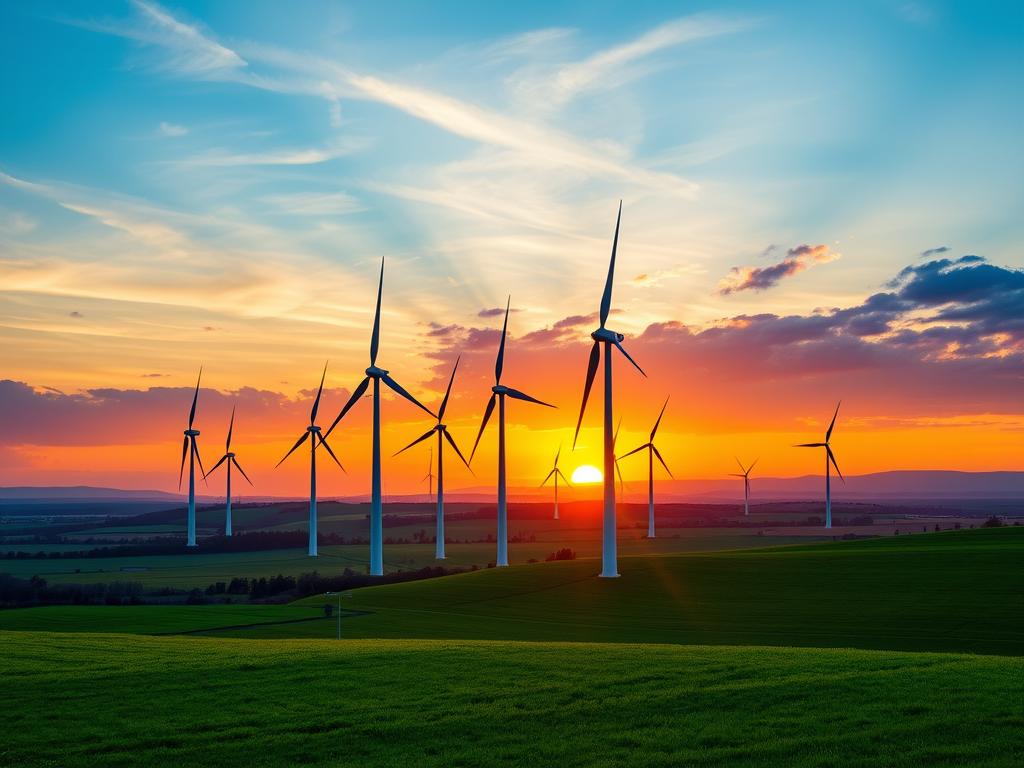
Standing on a hill, I looked at wind turbines and felt hope. These tall machines show our hope for a better world. They spin their blades gently, showing our commitment to a green future.
Wind power is changing the U.S. energy scene fast. It made up 22% of new electricity in 2022. This clean energy is helping us fight climate change, slowly replacing old energy sources.
Wind energy has a long history, from old windmills to today’s advanced turbines. These machines are now more efficient, thanks to new designs. They’ve evolved a lot since the first turbine in 1931 and the first offshore farm in 1991.
We’re going to look at new wind turbine designs. They use new materials and aerodynamics. This progress is taking us towards a future with clean energy, one spin at a time.
Overview of Wind Turbine Design
Wind turbine design is key to renewable power systems. These structures use wind energy, helping a lot with sustainable energy. Over time, wind turbines have gotten much better at making power.
Importance of Wind Energy
Wind energy is a big deal for green energy. Today’s wind turbines can grab 30% to 45% of wind’s energy. This is close to the 59.3% limit set by Albert Betz in 1919. This makes wind power a good choice instead of old energy sources.
Role in Sustainable Development
Wind turbines are vital for green growth. Most use horizontal axis machines to catch more wind and make more power. Three-bladed designs are popular because they’re stable, efficient, and look good.
These turbines fit well in the landscape and help the environment.
Technological Advancements
New tech has changed wind turbine design a lot. Modern turbines work at different speeds to catch more wind. They use smart controls like:
- Pitch angle control for less load
- Yaw control to face the wind
- Stall mechanisms for safety in strong winds
These updates have made wind turbines better and more reliable. They’re now a big part of green energy.
Definition of Wind Turbine Design
Wind turbine design is about making systems that use wind energy well. It mixes engineering with wind power tech. The goal is to turn wind’s energy into electricity efficiently. Designers also think about cost, how long it lasts, and its effect on the environment.
Components of Wind Turbines
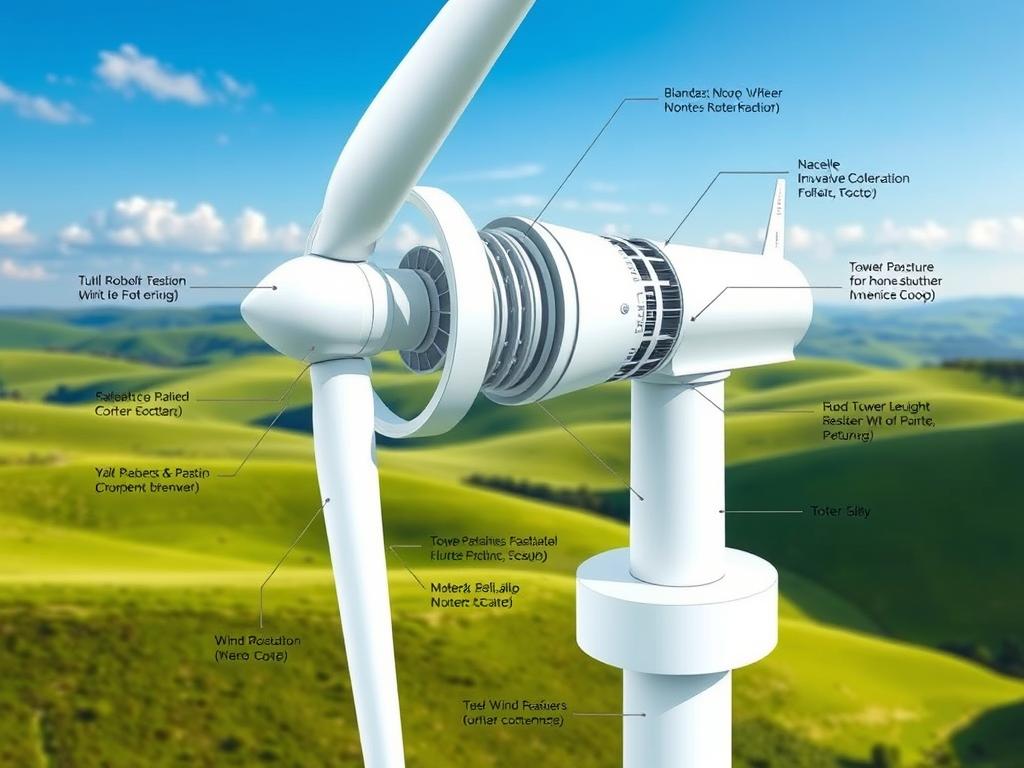
Modern wind turbines have important parts to make electricity:
- Tower: Usually 50-200 meters tall, it holds up the whole thing
- Rotor: Has three long fiberglass blades
- Generator: Turns mechanical motion into electricity
- Nacelle: Holds the shaft, gearbox, and other key parts
- Controller: Runs the turbine
Types of Wind Turbines
There are two main types of wind turbines:
- Horizontal-axis wind turbines (HAWTs): Common and efficient, with blades that spin around a horizontal axis.
- Vertical-axis wind turbines (VAWTs): Quieter and good for windy places, spinning around a vertical axis.
New designs include multiple-rotor systems and floating turbines for the sea. These updates aim to make turbines more efficient and useful in different places.
History of Wind Turbine Design
Wind energy has a long history, over a thousand years. It shows how humans have improved wind turbines over time. This journey is a story of human creativity and technology growth.
Early Windmills to Modern Turbines
The first use of wind energy was in 644 AD in Persia. These early windmills used stones to work. This was the start of using wind power.
In the 12th century, new windmills came. They had a design that could control speed. This was done by using brakes or furling.
The 19th century was a big time for wind energy. Over a million windmills were in the American Midwest and West. This was a key moment for wind energy’s future.
Major Milestones in Development
The late 1800s were a big change for wind energy. In 1888, Charles F. Brush made the first big windmill that could make electricity. This was a big step towards today’s wind turbines.
The 20th century saw big improvements in wind turbines. By 1941, the first megawatt wind turbine was made. In the 1990s, California had over 2,000 MW of wind energy. This was more than half of the world’s wind energy at the time.
Now, the U.S. has about 70,000 working wind turbines. This growth shows how important wind energy is today. It shows how far we’ve come in using wind power.
Evolution of Wind Turbine Technology
Wind turbine technology has grown a lot since 1887. The first electricity-generating turbine was built in Glasgow, Scotland. Now, we see big changes in design and how well they work.
Transition from Conventional to Advanced Designs
The 20th century was a big change for wind turbines. Early ones had many wooden blades, like Charles Brush’s 1888 turbine. Now, we have sleek designs with fewer, bigger blades for better efficiency.
Modern turbines use new materials like carbon fiber and metal alloys. These materials are strong but light. They help turbines get bigger and make more power.
The Impact of Materials Science
New materials have changed wind turbine design a lot. Turbines can now be really tall, like GE’s Haliade-X at 260 meters. Its 107-meter blades catch wind better, making 45% more energy than old turbines.
New ways to build turbines, like segmented blades, have made them cheaper. They can go in places that were hard to reach before. These changes, along with better designs, have made turbines more efficient and powerful.
Principles of Wind Turbine Functionality
Wind turbines use moving air to make electricity. They work thanks to advanced turbine aerodynamics. This makes them key in renewable energy.
Aerodynamics and Lift Forces
The blades of wind turbines are very important. They can be over 170 feet long. When wind hits them, they lift up, just like an airplane wing.
At 7-11 mph, the blades start to turn. This turns a rotor, which is connected to a generator.
Energy Conversion Processes
Wind energy goes through changes. First, the rotor turns because of wind. Then, it powers a generator.
This generator makes electricity. Most turbines work best at 30-55 mph. They stop at 65 mph for safety.
Modern turbines can change how they face the wind. This makes them work better. Some don’t need a gearbox, which means less upkeep.
Benefits of Improved Wind Turbine Design
Wind energy has made big strides lately. New wind turbine designs bring big wins. They help renewable power in many ways.
Enhanced Power Output
New designs make turbines work better. In 2023, U.S. turbines could make 3.4 megawatts of power. That’s a huge jump from 1998-1999.
Larger rotors and taller towers help a lot. Land turbines now stand at 103.4 meters tall. Offshore ones might hit 150 meters by 2035.
Reduced Environmental Impact
Wind turbines are getting greener. Ørsted wants to turn old turbine bases into reefs. This helps marine life and shows wind energy’s good side.
Long-Term Economic Benefits
Good designs mean big savings. The U.S. aims to cut offshore wind costs by 70%. This will make wind power more affordable.
The World Economic Forum says offshore wind will grow tenfold by 2030. This shows wind energy’s economic promise.
Applications of Wind Turbine Technology
Wind turbine technology is used in many ways in the energy world. It’s found in big wind farms and small homes. These systems help make power in a green way.
Onshore Wind Farms
Onshore wind farms are very common. They have lots of turbines, from 500 kW to 5 MW. These turbines move slowly, at 12 to 22 times a minute.
The U.S. has grown a lot in this area. By 2010, it had over 40,000 megawatts of wind power.
Offshore Wind Installations
Offshore wind farms are becoming more popular, especially in Europe. They use big turbines, over 3 MW. The U.S. is also planning to use them along its coasts.
These farms face maintenance issues. But they get stronger winds and are less seen from land.
Distributed Generation Systems
Distributed wind power systems are getting more attention. They include big turbines for communities and small ones for homes. The U.S. is a leader in making these small turbines.
These systems help people not rely so much on big power companies. They also help the environment and fight climate change. As technology gets better, wind turbines will be even more important for our energy needs.
Challenges and Limitations of Wind Turbine Design
Wind energy is growing in the United States. Despite this, it faces many challenges. These include environmental concerns, technical limits, and issues with connecting to the grid.
Environmental and Aesthetic Concerns
Wind turbines can disturb the environment. They make noise, with sounds up to 43 decibels at 1,000 feet. They also affect the view, especially in beautiful areas.
To lessen these effects, turbines are placed far apart. They are also painted white to look better and be safer.
Technical Limitations
Wind turbines have physical limits. They need wind speeds of 7 mph to work and stop at 55 mph to avoid damage. Their big blades make making and moving them hard.
For example, a GE 1.5-megawatt turbine is 164 tons. This makes moving it a big challenge.
Integration with Existing Power Grids
Getting wind energy into the grid is hard. Wind power is not always there, making it hard to add to the grid. It costs a lot to upgrade the grid to connect wind farms to cities.
The U.S. Department of Energy is working on new solutions. They want to make turbines more flexible and improve the grid.
Despite these problems, wind energy is still growing. It added $20 billion to the U.S. economy in 2022. It also cut 336 million metric tons of carbon emissions each year.
Wind energy wants to provide 20% of U.S. electricity by 2030. This goal is driving new ideas in turbine design and grid management.
Future Trends in Wind Turbine Design
The wind energy industry is changing fast. Future wind technology aims for better efficiency and more uses. Wind power now makes up about 10 percent of U.S. electricity. New ideas are needed to grow this number and meet energy needs.
Innovations on the Horizon
Vertical axis wind turbines (VAWTs) are changing the game. Companies like SeaTwirl have made stable, platform-free VAWTs. These could make wind farms more efficient.
The U.S. government wants 15 gigawatts from floating offshore wind by 2035. They plan to have 300 floating turbines by 2030. This could use stronger winds at higher altitudes, making more power.
Potential for Hybrid Energy Systems
Hybrid energy systems are becoming popular. They mix wind power with other renewables. For example, wind turbines and solar panels together can make more renewable energy.
The National Renewable Energy Laboratory says new tech could increase wind potential by 80 percent in the U.S. by 2030. This is key for a green energy future.
In Europe, wind energy is making a big impact. Denmark gets 60% of its electricity from wind. This shows what other countries can do.
The European Investment Bank is funding clean energy projects, including €3.4 billion for wind energy. This growth shows wind power’s role in a cleaner future.
FAQ
Q: What are the main components of a modern wind turbine?
A: A modern wind turbine has several key parts. The tower is usually 50-200 meters tall. It has a rotor with three long fiberglass blades.
The generator turns motion into electricity. The nacelle houses the shaft, gearbox, and other parts. The controller manages the turbine’s operation.
Q: How do wind turbines generate electricity?
A: Wind turbines make electricity by using wind energy. The blades’ design creates lift forces when wind hits them. This makes the rotor spin.
The spinning energy goes to a generator. It’s usually through a gearbox. The generator then turns this energy into electrical power.
Q: What are the two main types of wind turbines?
A: There are two main types of wind turbines. Horizontal-axis wind turbines (HAWTs) are more common and efficient. Vertical-axis wind turbines (VAWTs) are quieter and better for turbulent winds.
Q: How has wind turbine technology evolved over time?
A: Wind turbine technology has changed a lot. From ancient windmills to modern turbines, it’s come a long way. Advances include stronger materials and better designs.
Now, turbines are bigger and more efficient. Offshore wind farms are also being developed. New ideas like multiple-rotor designs and floating turbines are being explored.
Q: What are the benefits of improved wind turbine designs?
A: Better wind turbine designs have many benefits. They produce more power and are more efficient. They also have less environmental impact and cost less to maintain.
These improvements make wind power more competitive. They help make energy more sustainable in the long run.
Q: What are some challenges facing wind turbine design?
A: Wind turbine design faces several challenges. There are concerns about noise and how they look. There are also limits to how big turbines can be.
Extreme weather can also be a problem. Offshore turbines face extra challenges like installation and marine impacts.
Q: What are some future trends in wind turbine design?
A: Future trends include airborne turbines for stronger winds. There are also bladeless designs for less noise and impact on wildlife. Vertical axis turbines are being developed for cities.
Quiet turbines are being made to address noise issues. Hybrid systems combining wind with other renewables are also being explored.
Q: How do wind turbines contribute to combating climate change?
A: Wind turbines help fight climate change by providing clean energy. They can replace fossil fuels in making electricity. Wind power is growing fast, making a big difference.
It’s now 22% of new electricity in the U.S. in 2022. This helps reduce emissions and move towards a green future.
Q: What role do government policies play in wind energy development?
A: Government policies are crucial for wind energy growth. They offer incentives and set targets. They also create rules that help wind power grow.
Places like New Zealand have seen big progress thanks to these policies. They help speed up wind power adoption and drive new technologies.
Q: How are wind turbines addressing environmental concerns?
A: Wind turbines are tackling environmental issues in many ways. They’re making quieter designs to reduce noise. They’re using advanced materials to lessen environmental impact during making and setting up.
New ideas like the Vortex Bladeless Wind Turbine aim to reduce wildlife harm. These efforts are making wind turbines more eco-friendly.
Source Links
- https://sustainableliving.org.nz/revolutionary-advances-in-wind-turbine-design-efficiency/ – Revolutionary Advances in Wind Turbine Design & Efficiency – sustainableliving.org.nz
- https://windexchange.energy.gov/small-wind-guidebook – WINDExchange: Small Wind Guidebook
- https://bkvenergy.com/blog/wind-turbines-for-homes/ – Wind Turbines for Homes
- https://www.alternative-energy-tutorials.com/wind-energy/wind-turbine-design.html – Wind Turbine Design for a Wind Turbine System
- https://en.wikipedia.org/wiki/Wind_turbine_design – Wind turbine design
- https://www.britannica.com/technology/wind-turbine – Wind turbine | Renewable Energy, Efficiency & Design | Britannica
- https://windenergy.fandom.com/wiki/Wind_turbine_design – Wind turbine design
- https://www.nrel.gov/research/re-wind.html – Wind Energy Basics
- https://www.nrel.gov/docs/fy01osti/28607.pdf – The History and State of the Art of Variable-Speed Wind Turbine Technology
- https://www.uti.edu/blog/wind-turbine/comprehensive-history-of-wind-energy – The History of Wind Energy | UTI
- https://www.energy.gov/eere/wind/articles/1970s-pioneers-todays-wind-industry-aerospace-researchers-championed-wind-energy – From 1970s Pioneers to Today’s Wind Industry, Aerospace Researchers Championed Wind Energy
- https://www.nationalgrid.com/stories/energy-explained/history-wind-energy – The history of wind energy
- https://www.brunel.net/en/blog/renewable-energy/how-wind-turbines-have-evolved – How Wind Turbines Have Evolved: From the First to the Bigges
- https://actionrenewables.co.uk/news/the-evolution-of-wind-turbines/ – The evolution of wind turbines – Action Renewables
- https://www.energy.gov/eere/wind/how-do-wind-turbines-work – How Do Wind Turbines Work?
- https://www.energy.gov/eere/wind/how-wind-turbine-works-text-version – How a Wind Turbine Works – Text Version
- https://www.perchenergy.com/blog/innovation/innovations-wind-turbine-design – Innovations In Wind Turbine Design
- https://www.energy.gov/eere/articles/wind-turbines-bigger-better – Wind Turbines: the Bigger, the Better
- https://www.herofutureenergies.com/blog/wind-turbines/ – Wind Turbines: How They Work, Types, Applications & Benefits
- https://www.wbdg.org/resources/wind-technology – Wind Technology | WBDG – Whole Building Design Guide
- https://www.esig.energy/wiki-main-page/wind-turbine-technologies/ – Wind Turbine Technologies – ESIG
- https://beiconstruction.com/the-challenges-for-wind-energy/ – The challenges of designing and construction for wind energy
- https://wes.copernicus.org/articles/8/1071/2023/ – Grand challenges in the design, manufacture, and operation of future wind turbine systems
- https://www.inspirecleanenergy.com/blog/sustainable-living/wind-turbine-pros-and-cons – Wind Turbines Pros And Cons | Inspire | Inspire Clean Energy
- https://www.triplepundit.com/story/2024/wind-energy-trends-2024/792916 – 5 Wind Power Trends to Watch in 2024
- https://www.eib.org/en/essays/what-is-future-wind-power – What is the future of wind power?