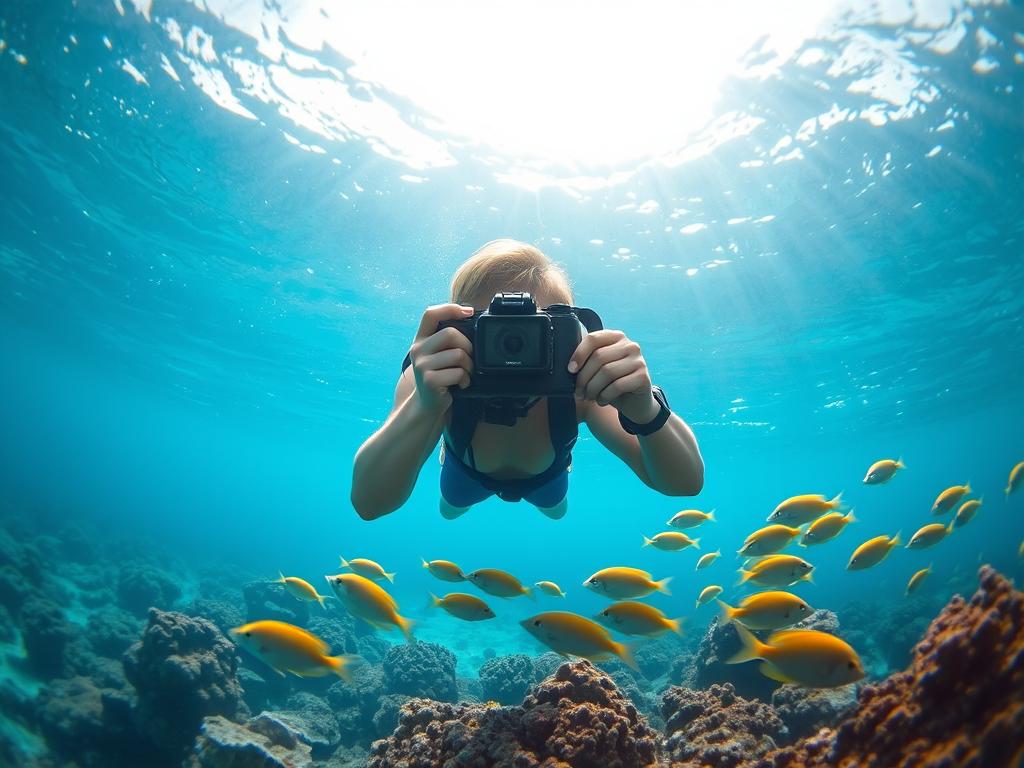
There’s a calm world under the waves, full of color and life. It’s a place that calls to be captured. For those who dive into underwater photography, each dive is a journey into a unique world.
Having the right waterproof camera tips and GoPro tricks is key. It helps preserve the beauty of the ocean and brings it to the surface. But, with so many camera settings, it’s easy to miss the important details.
This guide shows how to make stunning underwater photos with GoPro. The HERO 10 and HERO 11 are great for diving, with their small size and amazing features. There’s a lot to explore for the perfect shot.
Dive into the world of 4K and high frame rates. Here, motion meets clarity. Pay attention to white balance and bit rates for authentic shots.
Whether you’re gliding through coral or capturing fast marine life, GoPro settings are key. They help you capture the beauty of the ocean. Use RAW formats and wide lenses to bring the ocean’s colors to your photos.
Unlock the full power of underwater photography by making smart choices. Let the beauty you find beneath the waves connect you to the world above.
Importance of Choosing the Right GoPro Settings
For anyone who loves underwater shots, the right GoPro settings are key. The underwater world is full of beauty, but it needs special settings for action photography. Getting these settings right can make a big difference in your photos.
- Water clarity and depth affect light penetration.
- The color spectrum underwater shifts predominantly towards the blue and green, necessitating specific color balance adjustments.
- Moving subjects require faster shutter speeds to avoid blurring.
Understanding Water Conditions
Different waters have different conditions. Salinity, temperature, and particles can change how your photos look. For example, red light fades fast underwater. You can adjust your GoPro’s white balance to keep colors right.
Lighting Considerations
Light is very important for underwater photos. Natural light is best, but it gets less deep. Dive lights help a lot. They make ISO, white balance, and shutter speed key for clear photos.
Setting these up right lets divers and photographers capture amazing marine life. It turns ordinary dives into unforgettable photos with their GoPros.
Best GoPro Models for Underwater Photography
Choosing the right GoPro model is key for underwater photography. The GoPro HERO 10 and HERO 11 are top picks. They offer advanced features for all photographers.
The GoPro HERO series is known for its durability and underwater benefits. The HERO 10 and HERO 11 have HyperSmooth stabilization. This keeps video smooth in underwater currents.
These models also have high-resolution settings and high frame rates. They’re great for clear images and slow-motion videos of sea life.
The GoPro HERO 8 is also popular for action photography. It has HyperSmooth 2.0 and TimeWarp features. These allow for excellent video quality and creative options underwater.
GoPro’s underwater performance can be improved with accessories:
- Portrait adapter mounts for perfect underwater portraits,
- Macro lenses for detailed shots of coral and marine life,
- Dome lenses for wide-angle views of underwater landscapes.
Choosing the right accessories like underwater housing and filters is important. Filters, like red filters, adjust colors distorted by water. Lighting accessories, like the Sidekick, illuminate dark areas for vibrant photos.
Using these tips with the right GoPro model and accessories can make your underwater filming amazing. It turns simple sessions into a visual diary of marine exploration.
Essential Settings for Underwater Capture
For action photography fans, knowing the best GoPro settings for underwater shots is key. The right mix of video resolution, frame rate, and field of view makes your footage better.
Video resolution is the base for underwater shots. For top-notch content, set your GoPro to 4K. This way, even tiny sea particles are clear.
Video Resolution and Frame Rate
Frame rate is key for smooth underwater scenes. A 60 frames per second (fps) setting is best for smooth motion. But, try different rates to find the best for your GoPro and the water.
Field of View (FOV) Options
The field of view setting is vital for wide underwater shots. A Wide FOV lets you capture more, so you don’t miss anything. Adjusting settings in a waterproof housing can be tough, so get it right before diving.
Using these settings, GoPro users can improve their skills and make their underwater videos stunning. Whether for work or fun, these settings make every dive look amazing on camera.
Adjusting Color Settings Under Water
Learning to adjust your GoPro’s color settings is vital for capturing underwater scenes. It’s important for both accurate action shots and just exploring the deep. Knowing about white balance and color profiles is key. These settings change how colors look and the mood of your underwater photos.
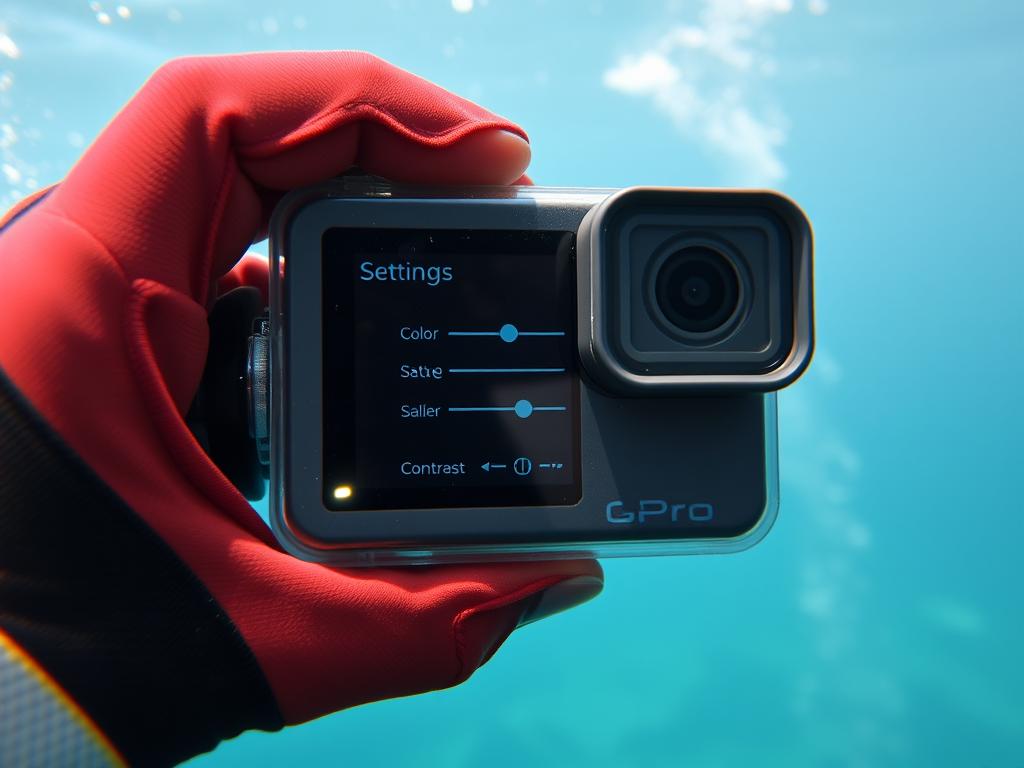
Changing the white balance is a key trick for underwater photos. The best setting is between 4500K and 6000K. This helps bring back the red light that seawater absorbs, making colors look natural.
Color Profile Choices
Choosing the right color profile is important for better underwater photos. GoPro offers ‘Flat’ and ‘GoPro Color’ profiles. ‘Flat’ is good for editors who like to adjust colors later. ‘GoPro Color’ gives vibrant colors right away, loved by many.
Using these settings improves your photos and takes advantage of the Hero 11 Black’s features. It has 5K/60 resolution and 10-bit color. This is great for underwater videos, making colors more vivid and details better for editing.
Tips for Focusing on Underwater Subjects
Mastering underwater photography means knowing how to focus on subjects. The underwater world is different, so setting your GoPro settings right is key. This helps you take clear, exciting action photography.
Choosing the right focus mode is important. Most GoPros use Auto Focus, which is good for most shots. But sometimes, you need to use manual focus. This is helpful before you dive, to make sure your camera is ready.
- Manual Focus: Good for static scenes or when you want more control over depth of field.
- Auto Focus: Best for fast-moving subjects or if you want it easy.
Spot metering is also useful underwater. It lets the camera focus on a small area, like the center of the frame. This is great for subjects against the sun or in cloudy water.
- Spot Metering: Perfect for making your main subject stand out, no matter the light.
Learning about focus settings and spot metering can really improve your underwater photos. Whether you’re taking pictures of coral reefs or schools of fish, the right GoPro settings make a big difference. They help you capture the beauty of your underwater adventures.
Recommended Frame Rates for Various Conditions
Exploring the deep blue with a GoPro is exciting. The best GoPro settings are key. Frame rates help capture the underwater world well.
For calm waters, a lower frame rate works well. Settings around 30fps are good for peaceful scenes. This saves memory and battery while keeping images clear.
Rough seas are a different story. Fast-moving subjects need a higher frame rate. Use 60fps to avoid motion blur and keep footage clear.
- 30fps for calm waters – Ideal for capturing serene underwater landscapes.
- 60fps in rough seas – Ensures smooth footage amidst waves and rapid movement.
For fast action photography, like quick marine life or divers, go higher. 120fps makes stunning slow-motion videos. It shows details and movements not seen at normal speed.
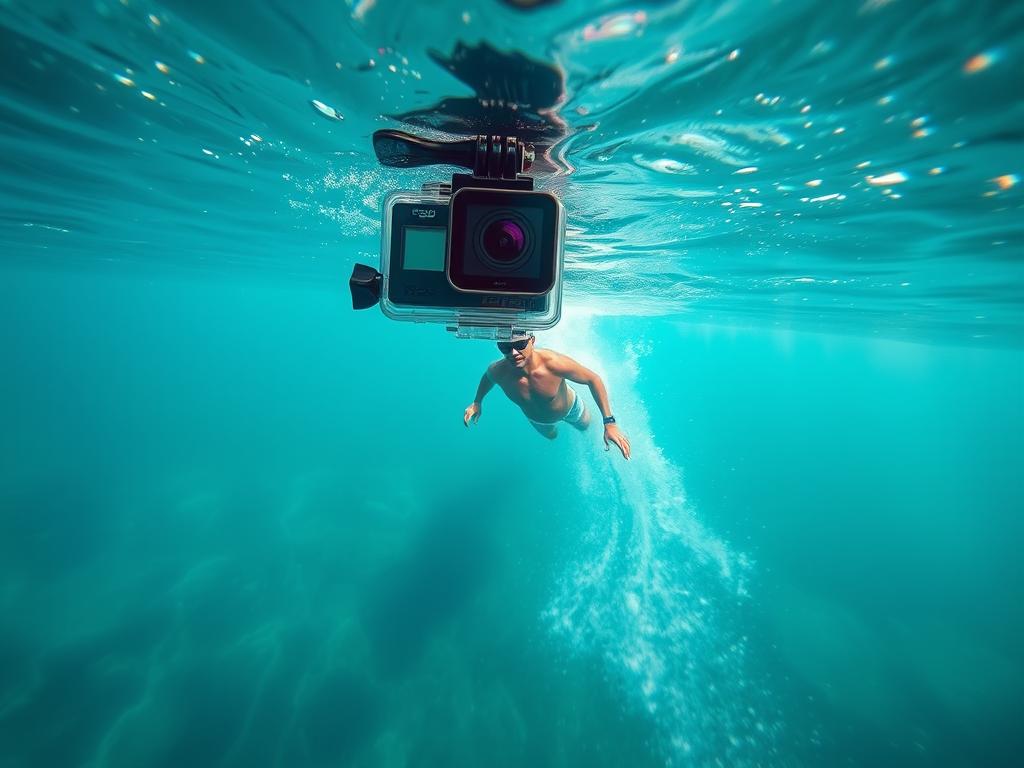
Changing frame rates improves your footage’s quality. It makes underwater shots more impactful. With the best GoPro settings, you capture every moment, no matter the conditions.
Utilizing Filters for Underwater Shots
Using the right filters can make your underwater photos better. It’s key to know when and how to use them. This helps you get clear, vibrant shots of underwater scenes.
One great GoPro trick is using red filters underwater. These filters fix the loss of red light in water. They’re best in blue or tropical waters, bringing back warm colors and making images look real.
Waterproof camera tips also talk about polarizing filters. They’re not always needed underwater but are great for surface shots. Polarizing filters cut down on glare from the water’s surface, making things clearer and easier to see.
Choosing the right filter depends on the dive’s depth and conditions. Shallow waters might need a lighter red filter, while deeper waters need a stronger one. Make sure your GoPro’s underwater housing fits the filter well for protection.
Here are some good filter options for your GoPro:
- FLIP5 3 Filter Kit
- PolarPro HERO5 Super Suit Red Filter
- PolarPro Switchblade 5 Filter
- PolarPro Macro GoPro Filter
For better underwater photos, try using filters with good lighting. This combo helps you see every detail. But remember, using both filters and lights can make colors look pinkish.
Using these tips will make your underwater photos amazing. Dive in with the right gear and get stunning shots every time.
Optimizing Battery Life While Shooting
For fans of action photography and underwater photography, it’s key to manage GoPro settings for battery life. This is very important during long shoots when power might be hard to find. We’ll talk about how to save power and handle lights, so your gear lasts longer and you don’t miss any underwater shots.
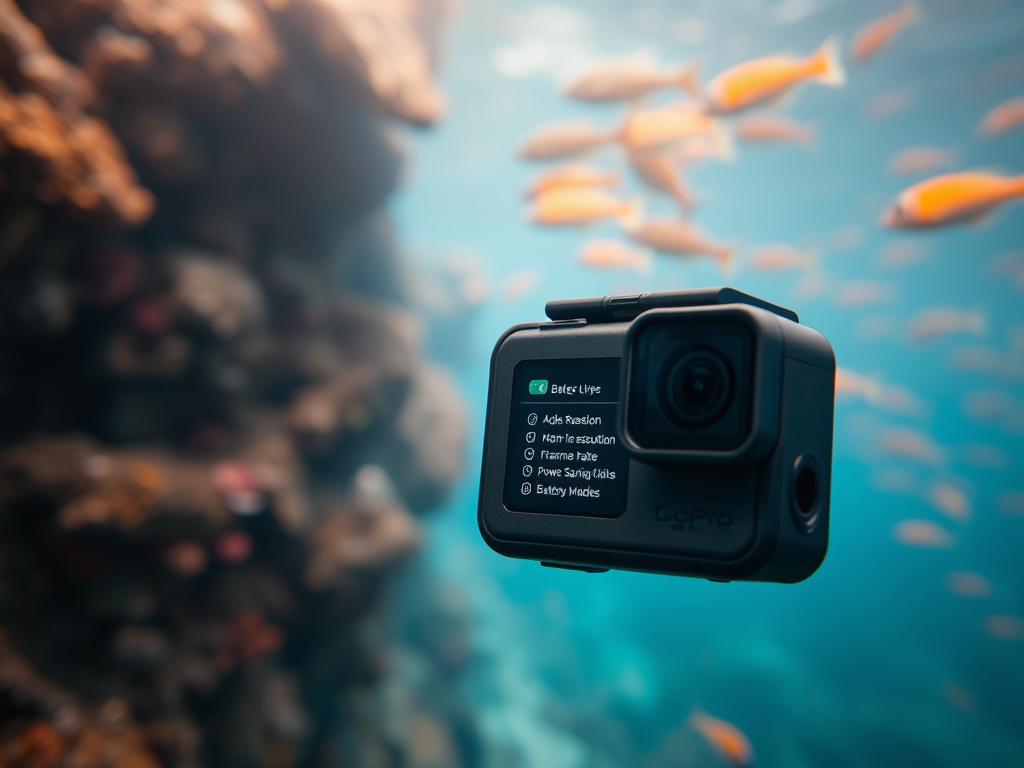
Changing your GoPro settings can really help your battery last longer. Important changes include:
- Turning off WiFi to save power.
- Lowering screen brightness to use less energy.
- Using the auto power-off feature to turn off the camera when not in use.
These tweaks are vital for longer battery life during action photography and underwater photography. Changing batteries can be hard or even impossible underwater.
Also, managing external lights is key to saving energy, mainly in underwater photography. To help your battery last longer:
- Turn off external lights when not needed to save power.
- Choose energy-saving lights that last longer without needing battery swaps.
By carefully managing these, photographers can spend more time underwater. They can capture the beauty of sea life without worrying about a dead battery.
Post-Processing Tips for Underwater Photos
After taking stunning underwater photos with your GoPro, it’s time to make them even better. Refining these images is key, as underwater photography has its own set of challenges. Using GoPro tricks and waterproof camera tips can turn your raw footage into amazing stories.
Adobe Lightroom is a top choice for editing RAW files. It lets you fine-tune color balance, fixing the common blue tint of underwater shots. The right software makes your underwater photos come alive with vibrant colors and sharp details.
- Color Correction: Tools like Davinci Resolve or Adobe Premiere Pro are essential for color grading. They provide advanced control over the hues and saturation, allowing for customized adjustments that suit the specific conditions of each shot.
- Brightness and Contrast: Enhancing these elements can dramatically improve underwater footage, compensating for the lower light environments beneath the surface. Adjusting these settings helps in highlighting the intricacies often missed during initial capture.
Using these post-processing techniques makes your underwater photos look amazing. It brings the underwater world closer to what we see with our eyes. These advanced GoPro tricks and waterproof camera tips will take your underwater photography to the next level.
Common Mistakes to Avoid While Filming
Starting with underwater photography using a GoPro can be tricky. Many beginners make mistakes that hurt the quality of their work. Knowing these errors can help you get better at action photography.
Depth adjustments and lighting variability are key areas to watch. Before you dive, make sure your best GoPro settings are set right. This includes adjusting the white balance for the underwater world, where red light is scarce.
- Failing to Adjust for Depth: As you go deeper, light and color change. You need different settings for each depth. Not adjusting can make your photos look bad.
- Ignoring Lighting Variability: Light changes a lot underwater. Many forget to adjust ISO and exposure. This can make your photos too bright or too dark.
Using the best GoPro settings for underwater photography and action photography helps a lot. Practice with these settings in different conditions. This can help you avoid mistakes and improve your shots.
Ready to Dive In: Getting Started
Starting your underwater photography journey with a GoPro is exciting. But, it needs careful planning and the right gear. Make sure you have a waterproof case, extra batteries, and lots of memory. A 1Tb card is a good choice.
Before you dive, check your gear. It’s your tool for capturing amazing photos. It also keeps you safe in the water.
Remember, safety is key. Keep your hands dry to avoid fogging the lens. Knowing your limits and respecting the ocean is important. It helps you take great photos and stay safe.
Get ready with the right tools and knowledge. This mix of preparation and safety is essential. It lets you capture the beauty of the underwater world safely.