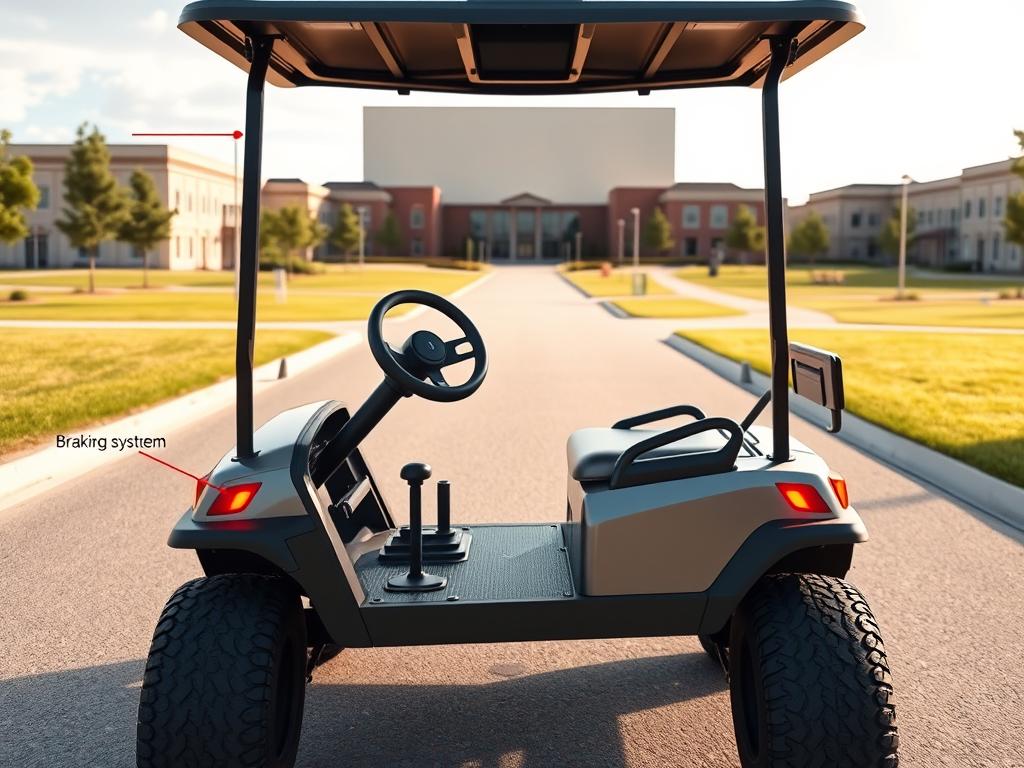
Imagine a warm summer day with a gentle breeze. You can zip around your neighborhood in a golf cart. This dream is now a reality with street-legal golf carts.
Turning a golf cart into a road-worthy vehicle is more than just adding lights. It’s about understanding the laws and meeting certain requirements. From Florida to Arizona, more people use these carts for short trips.

Street-legal golf carts must follow strict safety rules. Most states require headlights, taillights, turn signals, and mirrors. You also need a windshield, seat belts, and a horn that can be heard from 200 feet away.
Speed is important too. Your cart should go at least 20 mph but not more than 25-35 mph on public roads.
The process might seem hard, but it’s worth it. With the right changes, you get many benefits. You’ll save on fuel, help the environment, and enjoy the open air. Are you ready to hit the road? Let’s explore how to make your golf cart street legal.
Overview of Street-Legal Golf Carts
Street-legal golf carts are a green way to travel short distances. They mix the ease of golf carts with safety features for the road.
Definition of Street-Legal Golf Carts
Street-legal golf carts are called low-speed vehicles (LSVs). They have four wheels and go up to 20 to 25 miles per hour. They’re made for roads where the speed limit is 35 mph or less.
Key Features of Street-Legal Golf Carts
Street-legal golf carts need certain safety features:
- Headlights, taillights, and brake lights
- Turn signals and mirrors
- Windshield with wipers
- Functioning horn
- Seat belts
- Brakes and steering systems
Golf cart accessories are key to meeting these needs. Many places need you to register with the DMV and get a license plate. You might also need liability insurance and a driver’s license.
Remember, rules for street-legal golf carts differ by state and town. Some places have rules about emissions and the environment. Always check local laws before driving your golf cart on public roads to avoid trouble.
History and Evolution of Golf Carts
Golf carts have been around for almost a century. The first electric one was made in 1932 by Lyman Beecher in Florida. They were first used to help senior citizens, then became popular on golf courses.
Origins of Golf Carts
The 1950s were a big change for golf carts. R.J. Jackson, a Texas oil tycoon, made a three-wheeled, gasoline-powered cart. Companies like Cushman, E-Z-GO, and Club Car started making them. Back then, they could only go 18 to 27 holes on one charge.

Transition to Street-Legal Vehicles
As people saw how useful they were, golf carts became street-legal. This change led to the creation of low-speed vehicles (LSVs). LSVs had to meet safety standards for driving on roads.
Now, many places let electric golf carts on local roads. But, the rules differ. Today’s carts have GPS, tracking, and strong batteries. The golf cart industry is now worth almost $2 billion, showing how popular they’ve become.
Legal Requirements for Street-Legal Golf Carts
Golf cart laws change from state to state. Each state has its own rules. Knowing these rules is key for owners wanting to make their golf carts street legal.
Necessary Modifications and Equipment
To meet state rules, golf carts need certain safety features. These include:
- Headlights and taillights
- Turn signals
- Rearview mirrors
- Seat belts for all passengers
- Horn
- Windshield
- Slow-moving vehicle emblem
In Virginia, golf carts must go no faster than 25 mph to be street legal. They also need all the safety features mentioned.
Variations by State
Golf cart laws vary a lot between states. In Virginia, golf carts can’t go on highways with speeds over 35 mph. The state divides golf carts into two types: Low-Speed Vehicles (LSVs) and Medium-Speed Vehicles (MSVs).
LSVs can only go 25 mph and are allowed on roads with speed limits up to 35 mph. MSVs can go up to 35 mph on roads with limits of 45 mph or less.
Drivers must have a valid driver’s license and be at least 16 years old. Golf carts need to be registered with the Virginia Department of Motor Vehicles. They can only be on public highways with speed limits of 25 mph or less. In towns with less than 2,000 people, crossing higher-speed roads at certain points is okay.
The Process of Making a Golf Cart Street Legal
Turning a golf cart into a street-legal vehicle takes several steps. You need to plan carefully and follow the rules. Let’s look at the main steps and what documents you’ll need.
Step-by-Step Guide to Legalization
First, pick a golf cart that can be made street-legal. Add safety features like headlights, taillights, turn signals, and a horn. Also, install DOT-approved tires, windshields, and reflectors.
Make sure your cart can go between 20-25 mph. This is important for Low Speed Vehicles (LSVs).

Then, get the right insurance. In Florida, LSVs need $10,000 for personal injury and property damage. Check your state’s rules. Apply for an inspection to make sure your cart meets local laws.
Important Documentation to Obtain
You’ll need some important papers for the street-legal process:
- Proof of insurance
- Vehicle Identification Number (VIN)
- Bill of sale (since most golf carts don’t have titles)
- Registration papers
Go to your local DMV to register your cart. You’ll get a full-sized tag, like a car’s. Remember, 48 states let golf carts on public roads, but rules differ. Always check local laws before starting your project.
Benefits of Owning a Street-Legal Golf Cart
Street-legal golf carts have many good points for people and communities. They are useful and help the environment.
Practical Advantages for Residents
Golf carts are not just for golf anymore. They are great for short trips in places where cars go slow. They are popular, with sales over $1.5 billion in 2022.
Street-legal golf carts offer:
- Affordable transportation compared to cars
- Easy maintenance
- Enjoyable open-air rides
- Increased mobility for those with physical limitations
Environmental Benefits
Golf carts are good for the planet. Electric ones don’t make pollution. They help make communities greener.
Environmental advantages include:
- Lower emissions than standard vehicles
- Reduced noise pollution
- Decreased traffic congestion
- Promotion of community-focused lifestyles
Choosing golf carts helps the environment and makes life better. They mix convenience, green living, and community spirit.
Preventing Unauthorized Access to Golf Carts
Golf cart security is very important. As these vehicles are used more on streets, keeping them safe from theft is key. Good security measures protect your investment and give you peace of mind.
Role of Security Features
Modern golf carts have many security features. Key ignition systems stop thieves by needing a special key. GPS tracking helps find your cart if it’s stolen.
Anti-theft alarms sound when someone tries to tamper with your cart. This alerts you and scares off thieves.
Importance of Registration
Registering your golf cart is very important. It proves you own it and helps get it back if stolen. Many places need you to register your cart to use it on public roads.
In Florida, there are new rules for driving golf carts. Kids under 18 need a permit or license to drive legally. This makes driving safer and helps track who’s driving.
- Install key ignition systems and GPS trackers
- Register your golf cart with local authorities
- Comply with age restrictions for operation
- Use anti-theft alarms for added protection
By using these security steps and registering your cart, you can keep it safe. This makes sure your cart is both safe and legal on the streets.
Applications of Street-Legal Golf Carts
Street-legal golf carts are now used for community transport. They are also called Low-Speed Vehicles (LSVs). These carts can go up to 25 mph on roads with speed limits of 35 mph or less. They are great for short trips and local errands.
Use in Gated Communities
Gated communities love using golf carts for moving around. These carts are quiet and good for the environment. They are perfect for quick trips to places like community centers, pools, or visiting neighbors without a big car.
Golf Courses and Beyond
Street-legal carts were first for golf courses. Now, they have many uses. They are used in:
- Beach towns for leisurely drives
- Retirement communities for easy transportation
- College campuses for staff and student mobility
- Large outdoor events for guest shuttles
- Commercial areas for short-distance deliveries
These carts need safety features like headlights, taillights, turn signals, and seat belts. With the right registration and insurance, they are a cheap and green way to get around.
Tools and Resources for Street-Legal Golf Carts
Golf cart resources are key for making your cart street-legal. They help you understand local laws and find the right parts. This makes the process easier and more legal.
Understanding Local Regulations
Every state and city has its own rules for golf carts. Tools for legal compliance can guide you:
- DMV websites have forms for registration and permits
- Local police give the latest updates
- Golf cart dealers help with legal conversions
In South Carolina, golf carts are okay within four miles of home on secondary roads. You need a driver’s license and a $5 permit.

Recommended Accessories
You’ll need certain accessories to meet the law. Here are some:
- DOT-approved lighting kits
- Safety belts
- Mirrors
- Windshields
- Turn signals
Golf carts must go up to 20 mph to be legal. Some carts come ready for most U.S. states. This saves you time and effort.
Open PGP: An Overview
Open PGP is a key encryption standard for email and file security. It uses advanced methods to keep sensitive info safe from prying eyes.
Definition and Key Principles
Open PGP uses public key cryptography. It has two keys: a public one and a private one. This way, messages are encrypted with the recipient’s public key. Only the right person can open it with their private key.
Digital signatures are also key in Open PGP. They check if a message is real and hasn’t been changed on its way.
Unique Features of Open PGP
Open PGP is special because it’s open-source. This lets experts check and make it better. It works well with many email clients, making it easy to use.
Its strength comes from strong encryption algorithms. These formulas turn data into unreadable code. This keeps sensitive info safe. Even though it’s not for golf carts, knowing about Open PGP is useful for keeping electronic systems secure.
Challenges and Limitations in Golf Cart Legalization
Golf cart challenges and legal issues are big hurdles for owners wanting to make them street-legal. They must deal with a complex set of rules that change a lot from place to place.
Common Usability Issues
Street-legal golf carts have some big usability problems. They can’t go very fast, so they’re only good for slow areas. They also don’t protect you as well as cars do in accidents.
Weather can also be a big problem. Many golf carts don’t have roofs, so they’re not safe in bad weather.
Navigating Local Regulations
Following local laws is a big challenge. Different states have different rules for using golf carts on public roads. Some places don’t let you use them at night or on certain roads. You need to check your local rules to follow the law.
Here are some steps to make a golf cart legal:
- Get a Vehicle Identification Number (VIN)
- Put in the needed safety features
- Get insurance
- Register and title the vehicle
Even with these challenges, many places like golf carts. For example, Port Aransas has over 5,500 golf carts. But, there are still safety worries, like kids and unlicensed drivers. Finding a balance between safety and benefits is a big issue.
Future Trends in Golf Cart Legislation
Golf cart technology is changing fast, shaping how we move around. In the U.S., more places are letting golf carts on roads. Laws are changing to keep up with these new uses.
Advances in Technology and Safety
New golf carts are more than just for fun. They can go up to 25 mph and have safety features. These include seat belts, turn signals, and rearview mirrors.
Better batteries mean they can go farther. This makes them useful for daily trips.
Predictions for the Future of Golf Carts
The future of golf carts is exciting. Places like Amarillo, Texas, and Washington, North Carolina want to let them on roads. They want to make sure the speed limit is 35 MPH or less.
This move fits with the idea of “15-minute cities.” More places are saying yes to golf carts on streets. This could change how we plan cities for getting around.
Even though they’re still called “golf carts,” they’re really becoming “golf cars” or LSVs. Laws might get clearer on who can drive them. We might also see rules for safe driving on public roads.