
Watching my golden retriever, Max, struggle to climb stairs was a wake-up call. He was once full of energy, now he’s a senior with a gray muzzle. This moment led me to learn about senior pet care, and I want to share it with you.
Senior pet care is key, but it often surprises us. Our pets face aging challenges, just like us. By understanding pet aging and adjusting our care, we can improve their lives.

Did you know pets age differently based on their size? Small dogs are seniors at 9 to 11, while big dogs may be seniors at 6. This shows we need to tailor care for each pet.
Vets say senior pets need check-ups every six months. They also need regular exercise, special diets, and mental games. These changes can make your pet’s life longer and happier.
We’ll look into senior pet care, from food to home changes. Our aim is to keep our pets comfortable and lively as they age.
Understanding the Aging Process in Pets
Pet aging is a natural process that affects animals differently. As our furry friends grow older, they experience various changes. These changes impact their health and behavior. Recognizing these shifts is crucial for providing the best care for elderly pet health.
Physical Changes Associated with Aging
Senior pets often show visible signs of aging. Graying fur, slower movements, and vision or hearing loss are common. Elderly pet health concerns include osteoarthritis, urinary incontinence, and kidney disease. Regular check-ups can help detect these issues early.
Common Behavioral Changes
As pets age, their behavior may shift. You might notice decreased activity levels and altered sleep patterns. Some senior pets become more clingy, while others prefer solitude. These changes are normal aspects of pet aging and require patience and understanding from owners.
Breed-Specific Longevity Considerations
Lifespan varies among different breeds. Smaller dog breeds typically live longer, reaching senior status around 7-9 years old. Larger breeds may be considered seniors earlier, around 5-7 years. Maintaining a healthy weight is crucial, as studies show that dogs at ideal weight can live up to two years longer than overweight dogs.
- Regular wellness exams every six months
- Comprehensive physical exams
- Blood work to evaluate organ function
- Urinalysis for kidney function
- Thyroid function tests
Understanding these aspects of pet aging helps owners provide appropriate care. Recognizing potential health issues early ensures the best quality of life for their senior companions.
Importance of Regular Veterinary Checkups
Regular vet care is key for your pets’ health, especially as they get older. Senior pets need more visits to catch health problems early.
Recommended Frequency for Senior Pets
Healthy adult pets usually see the vet once a year. But, senior pets should go twice a year. This helps vets watch for age-related changes and health issues sooner.
Key Health Screenings and Tests
Vets do many tests during senior pet visits. These include:
- Physical examinations
- Blood and urine tests
- Dental checkups
- Nutritional assessments
These tests find common problems like arthritis and dental issues. Early detection can make a big difference in your pet’s life.
Discussing Concerns with Your Veterinarian
Your vet needs your help to care for your pet. Talk about:
- Changes in behavior or appetite
- Weight fluctuations
- Eating and drinking habits
- Exercise routines
- Any new symptoms or concerns
This info helps your vet make a special care plan. It might include diet, exercise, and medication.
Nutritional Needs of Senior Pets
As pets get older, their food needs change. Senior pet care means changing their diet to keep them healthy and long-lived. A study by Purina showed dogs eating right lived about two and a half years longer.
Choosing a Senior-Specific Diet
Senior diets are key for older pets. They have more protein to keep muscles strong. Elderly dogs need 50% more protein than younger ones.

Supplements for Joint and Heart Health
Supplements help senior pets too. Glucosamine and chondroitin help joints, while omega-3s are good for the heart. Always talk to a vet before adding supplements.
Managing Weight and Portion Control
Keeping weight in check is important for older pets. Too much weight can shorten their life by 2.5 years. Give treats that are low in calories, like those with fewer than 10 calories.
Adjust food amounts based on your pet’s age. Senior dogs might need 12-13% fewer calories than younger ones.
Good nutrition is essential for your senior pet’s happiness. Regular vet visits can help create a diet plan just for them.
Maintaining Mobility and Strength
Pet aging can make moving harder. It’s important to keep senior pets active. This helps their health and happiness.
Recommended Exercise Routines
Senior pets need low-impact activities. Short walks are better than long ones. Swimming is great for pets with joint problems.
Low-Impact Activities for Senior Pets
Here are some activities for older pets:
- Slow walks on soft surfaces
- Gentle swimming sessions
- “Sit to stand” repetitions
- Controlled play with soft toys
These exercises keep strength up without hurting joints.

Signs It’s Time to Adjust Their Activity Level
Look for signs of tiredness or pain during exercise. If your pet doesn’t want to move, limps, or breathes hard, change their routine. Up to 90% of senior cats have arthritis, which may not be obvious.
Regular vet visits help keep an eye on their needs as they age.
Grooming Considerations for Older Pets
Grooming is key for senior pet care and health. As pets get older, their grooming needs change. Owners must pay closer attention and care for them.
Managing Changes in Coat Quality
Senior pets often see coat quality changes. About 70% of older dogs get more sensitive skin. Regular brushing helps prevent mats and spots skin issues early.
Short-haired seniors need weekly brushing. Long-haired pets need 2-3 times a week. Bathe them once a month to keep their natural oils.
Importance of Regular Nail Trimming
Nail care is vital for senior pets. As they move less, their nails don’t wear down. Trimming often stops mobility problems and pain.
Use clippers or grinders made for older pets.
Oral Hygiene and Dental Care
Dental health is crucial for senior pets. Brushing and professional cleanings stop dental disease. This disease can harm overall health.
Use pet-safe toothpaste. Dental chews for older pets are also good.
60% of senior pets benefit from professional grooming. These sessions catch health issues early, with 80% found during grooming. Grooming every 4-6 weeks is best for senior pet health.
Home Modifications for Senior Pets
Creating a safe living space is key for senior pet care. As pets age, their needs change. Simple home changes can greatly improve their life.
Creating a Safe Living Environment
Begin by setting up multiple litter boxes for senior cats to prevent accidents. Use nightlights in areas your pet visits to lower fall risks. Keep the temperature between 78 and 80 degrees to help with body heat and joint mobility.

Assistive Devices and Products
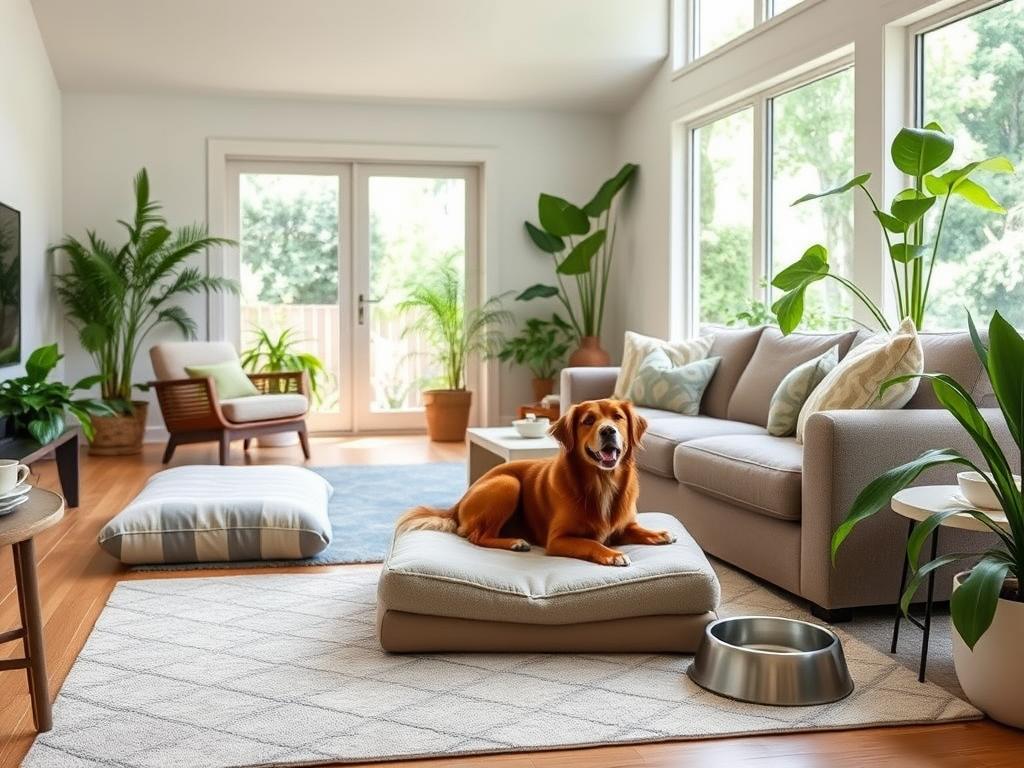
Get orthopedic beds to ease joint pain in arthritic pets. Elevated food bowls help with digestion for seniors. Support slings for dogs with mobility issues can lessen joint and muscle strain. Heating and cooling pads offer comfort and aid in healing.
Using Ramps and Non-Slip Rugs
Put ramps in for pets to reach furniture or vehicles. Use non-slip rugs on slippery floors to prevent falls and boost confidence. For big dogs, bowls should be 6 inches below chest height. Smaller dogs need a 3-inch height.
Remember, each pet is different. Talk to your vet for advice on home changes. This ensures the best care and support for your aging pet.
Recognizing Signs of Pain and Discomfort
As pets get older, their health needs change. It’s important to spot pain signs in senior pets to keep their life good. A 12-year-old senior dog may show signs of discomfort or pain.
Common Symptoms to Watch For
Senior dogs often show pain signs that are easy to miss. These include:
- Increased panting or changes in breathing patterns
- Reluctance to move or difficulty walking
- Excessive licking of a particular area
- Changes in appetite or sleeping habits
- Behavioral changes like aggression or withdrawal
Pain Management Options
Vet care is key in managing pain for senior pets. Options include medicines, supplements, or treatments like massage or acupuncture. For example, a dog with chronic nerve pain might need a mix of therapies.
When to Seek Immediate Veterinary Help
Certain symptoms need vet help right away. These include:
- Sudden changes in behavior or mobility
- Difficulty breathing or excessive panting
- Signs of severe pain or distress
- Refusal to eat or drink
Early action is vital for pain management and your senior pet’s quality of life. Regular vet visits and talking with your vet are key for elderly pet health care.
Mental Stimulation and Enrichment
Senior pet care is not just about physical health. It also includes keeping their minds sharp. Activities that challenge their minds can help them remember better and feel less stressed.
Activities to Keep Senior Pets Engaged
Just because pets get older, it doesn’t mean they can’t have fun. Simple things can keep them mentally active:
- New walking routes for fresh scents
- Car rides with open windows for sniffing adventures
- Short training sessions to reinforce commands
- Gentle play sessions with familiar toys
The Role of Interactive Toys
Interactive toys are key for senior pets. Puzzle feeders and toys that dispense treats challenge their minds. This makes them happy by releasing dopamine. Changing toys often keeps them excited and prevents boredom.
Importance of Routine and Structure
A daily routine is important for senior pets. It gives them a sense of security. Regular times for meals, walks, and play help them feel safe.
Every pet is different. Choose activities that fit their abilities and likes. Regular vet visits can help pick the right activities as your pet ages.
Socialization and Companionship Needs
Senior pet care means knowing how aging animals change. Their social needs shift, affecting their health and happiness.
Keeping Senior Pets Connected
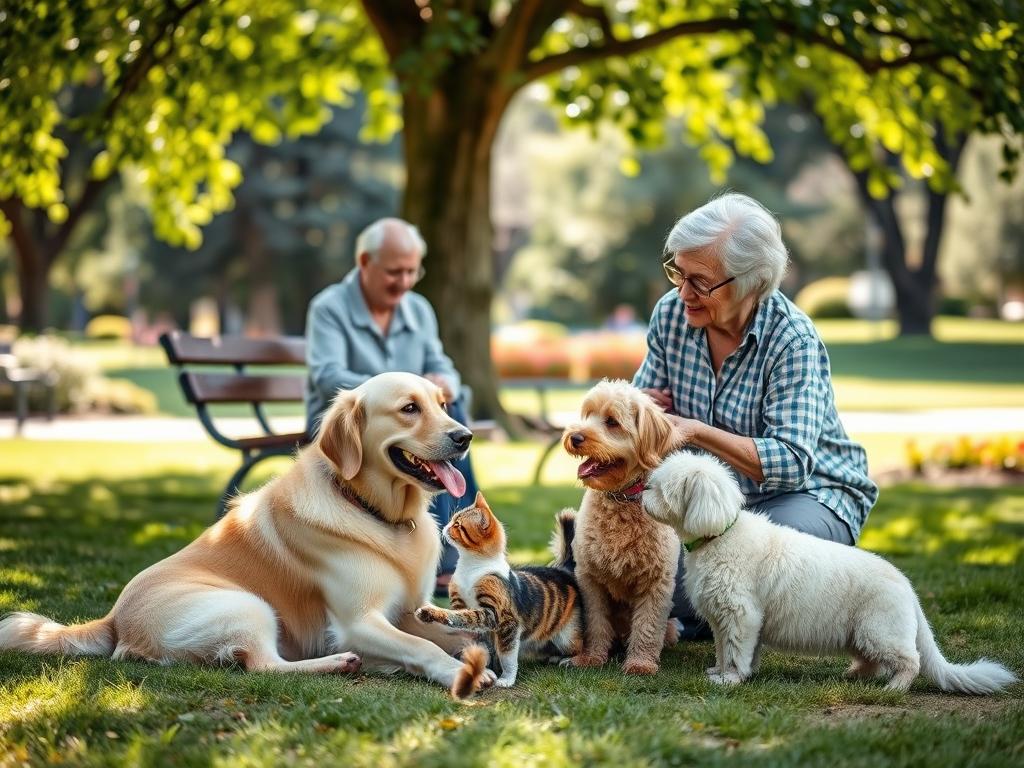
It’s key to keep senior pets social. Plan calm playdates with pets of the same age and energy. This stops them from feeling lonely and keeps their minds sharp.
If you can’t have a pet, visiting cat or dog cafes is a good option. It lets them socialize without the big responsibility of owning a pet.

Managing Interactions with Other Animals
Senior pets may not like younger, more active animals as much. Watch how they interact and give them a safe place to go if they feel too much.
Remember, big dogs may show signs of aging sooner than small ones. This can change how they like to socialize.
Understanding Changes in Social Behavior
Look for changes in how your pet acts socially. If they cling more or pull back, it could mean health or thinking problems. Regular vet visits, twice a year, can spot these early.
Using fun toys and gentle play can help keep their mind active. This can slow down aging and keep them happy.
In November, Adopt A Senior Pet Month, think about adopting an older pet. They often have gentle personalities and need less exercise. Meeting their social needs can greatly improve their life.
Traveling with Senior Pets
Planning a trip with your aging furry friend needs extra care. Senior pet care is key when going on adventures. Pets age differently, with cats being seniors at 10, large dogs at 7-8, medium dogs at 10, and small dogs at 11 years old.
Health Precautions to Consider
Before you travel, talk to your vet. They might suggest pain relievers for older dogs with arthritis. Pack all medications and plan regular breaks for stretching and hydration. Older pets may feel anxious during travel.
Preparing for a Stress-Free Journey
Look for pet-friendly places to stay. Vacation rentals with fenced yards are great for senior pets. If flying, pick airlines that let small pets in the cabin. For road trips, stop every couple of hours to keep your pet comfortable and mobile.
Accommodating Their Comfort and Needs
Bring familiar items like blankets or beds to help with joint pain. Be flexible with your plans, letting your pet rest when needed. Watch for signs of tiredness like restlessness or too much panting. Remember, pushing an older pet too hard can slow their recovery. By focusing on your senior pet’s needs, you can make the journey smooth and fun for both of you.
End-of-Life Considerations
As our pets get older, we face hard choices about their health. It’s tough to know when it’s time to say goodbye. We must think about their quality of life carefully.
Recognizing When It’s Time
Look at your pet’s comfort, appetite, and fun in daily activities. If pain or moving problems hurt their life a lot, talk to your vet. Making end-of-life decisions for your pet means thinking about their happiness and health.
Palliative Care Options
Pet hospice or palliative care helps in a pet’s last days or weeks. It includes:
- Pain management medicines
- Changing their diet
- Physical therapy like hydrotherapy or cold laser therapy
- Changing their home for comfort
Coping with Loss
Grieving for a lost pet is normal. Look for support in pet loss groups or counseling. It’s fine to take time to heal and remember your pet. Euthanasia, when needed, is quick, taking 10 to 20 seconds.
Resources for Pet Owners
Caring for senior pets can be tough. But, many resources are here to help. They offer the best vet care and senior pet care. Pet owners can find great help in caring for their aging friends.
Finding Support Groups and Communities
Online forums and social media groups are great for sharing. They offer advice and emotional support. Local vet clinics also have support groups for pet owners.
Online Resources for Senior Pet Care
The ASPCA has guides on senior pet care. They cover nutrition and mobility issues. Veterinary schools also have free resources like articles and videos.
Professional Services Available for Assistance
Mobile vets come to your home, making care easier for senior pets. Pet sitters with senior care experience offer special services. Rehabilitation specialists help with mobility and quality of life.
Many vet clinics have senior wellness programs. They provide health checks and care for older pets.